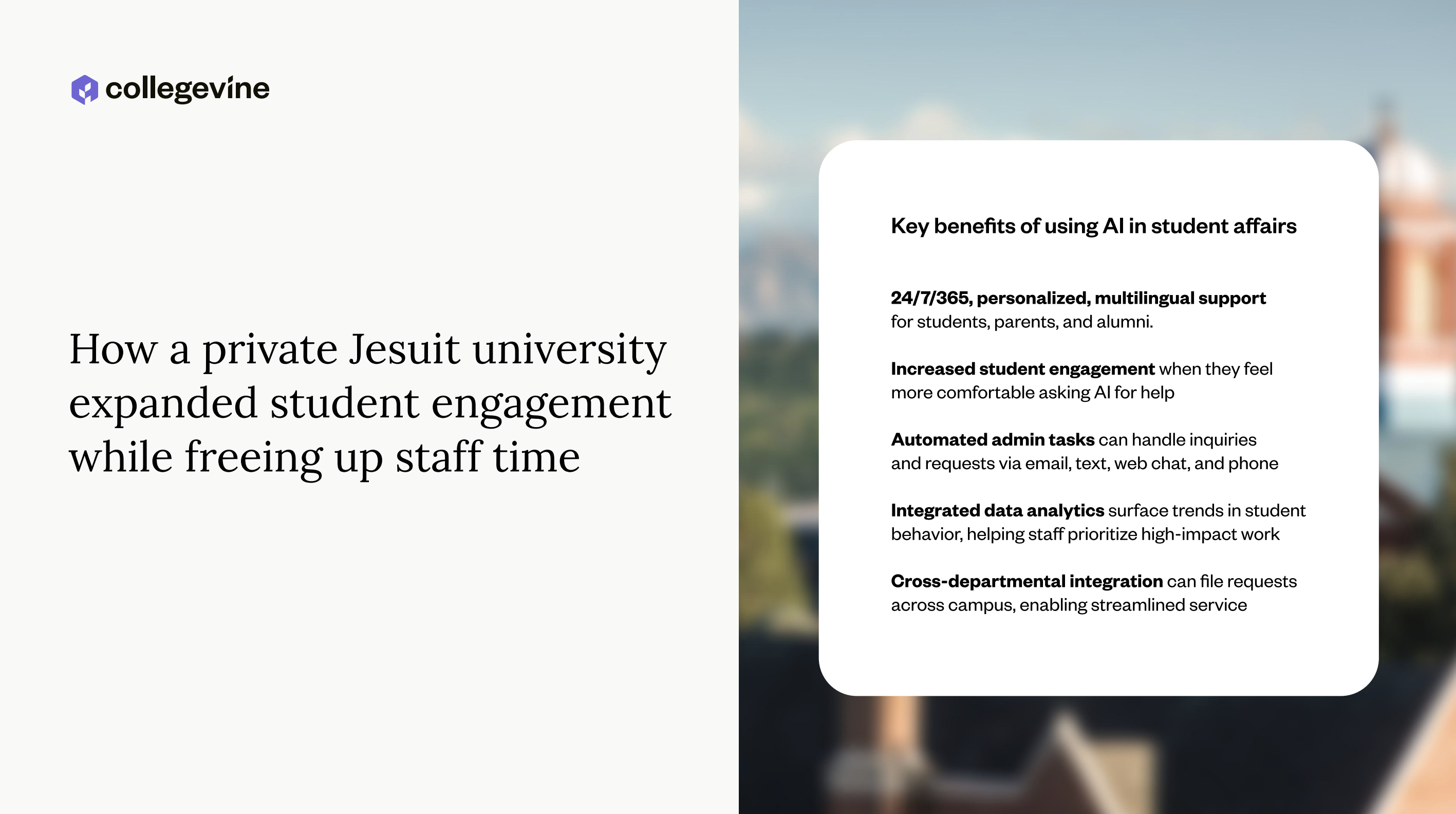
At the University of Mount Saint Vincent, schedules were built manually, one student at a time. Advisors spent their time finding course combinations that fit, and students couldn't move forward until an advisor had found options that worked.
For Lynne Bongiovanni, PhD, Provost and Dean of Faculty at UMSV, advisors "should be spending their time coaching students." Intelligent scheduling is one way UMSV is changing that.
Schedules built around each student
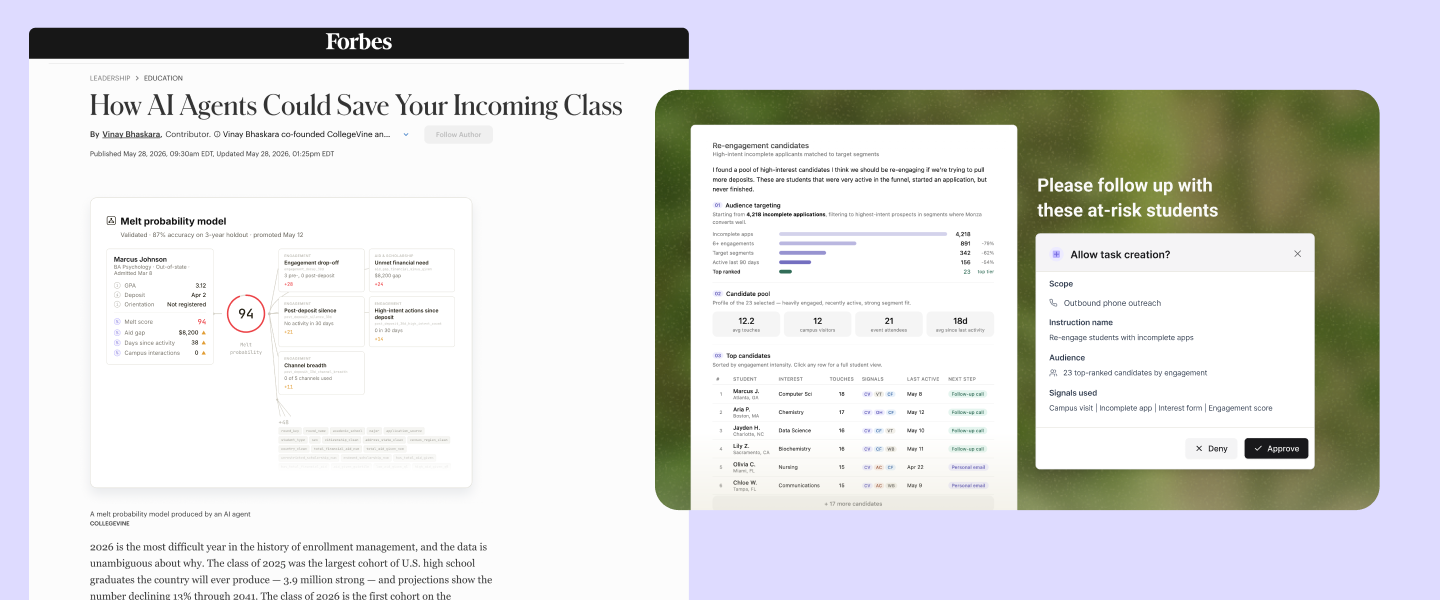
The Course Planning Assistant reads a student's calendar, grade history, and degree audit, then builds recommended schedules around what the student wants, what they still need to graduate, and everything else in their week, like a campus job or team practice. Advisors see each student's constraints alongside options like a balanced week, compact campus days, or a graduation-first plan, and can ask follow-up questions, such as whether a class conflicts with work.
Students can also generate a schedule and bring it to their advisor meeting. A calendar view shows whether a draft keeps them on pace to graduate on time, and nothing is registered until a schedule is submitted for approval.
It started with Betty
UMSV's work with CollegeVine began with Betty, its AI recruiter, who engages prospective students through a chatbot, email, and a prospective student helpdesk. Since September 2025, Betty has reached 17K potential students. 78% of her outreach happened outside the weekday, and her emails have a 40% open rate.
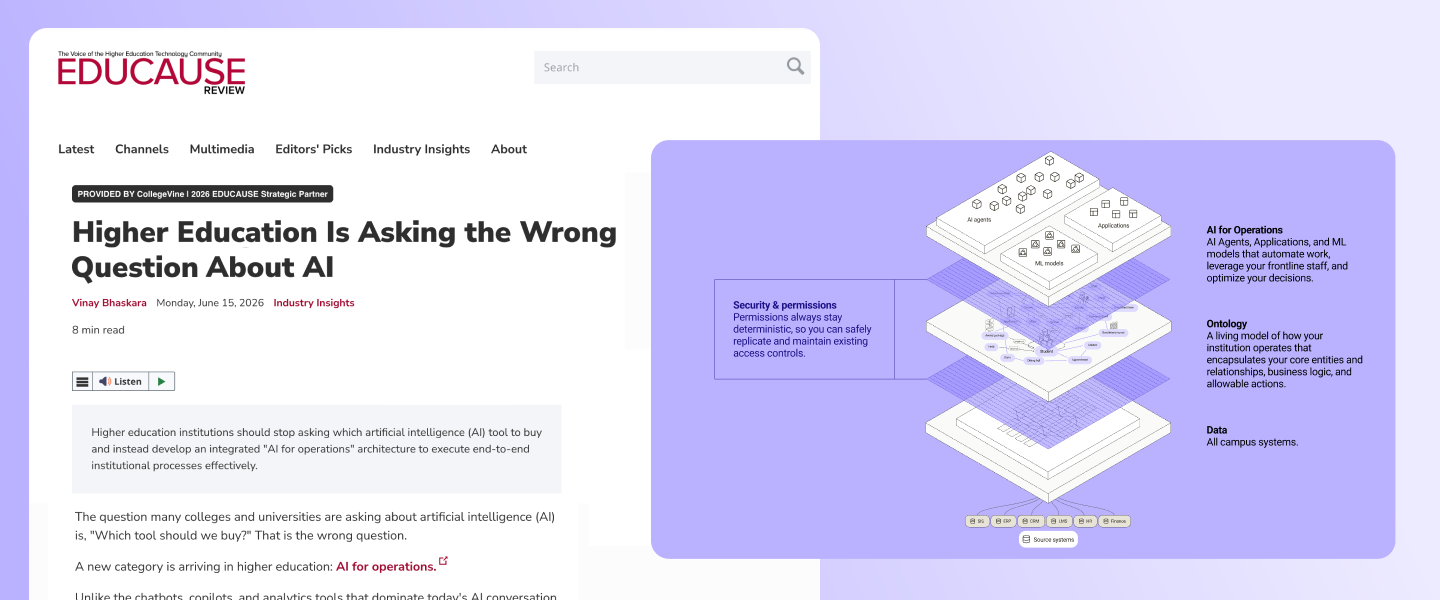
The work started with recruiting and is moving into academic outcomes and the wider student journey. Intelligent scheduling can be one capability inside an academic affairs ontology, a shared model of the academic side of an institution.