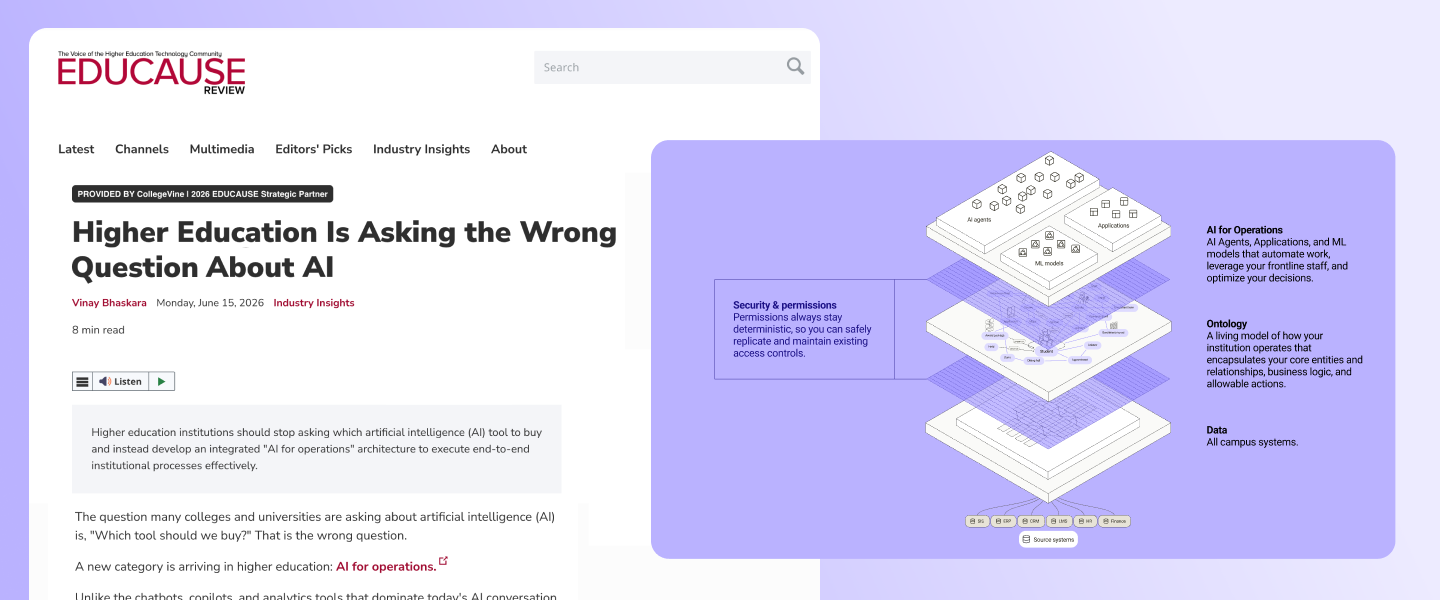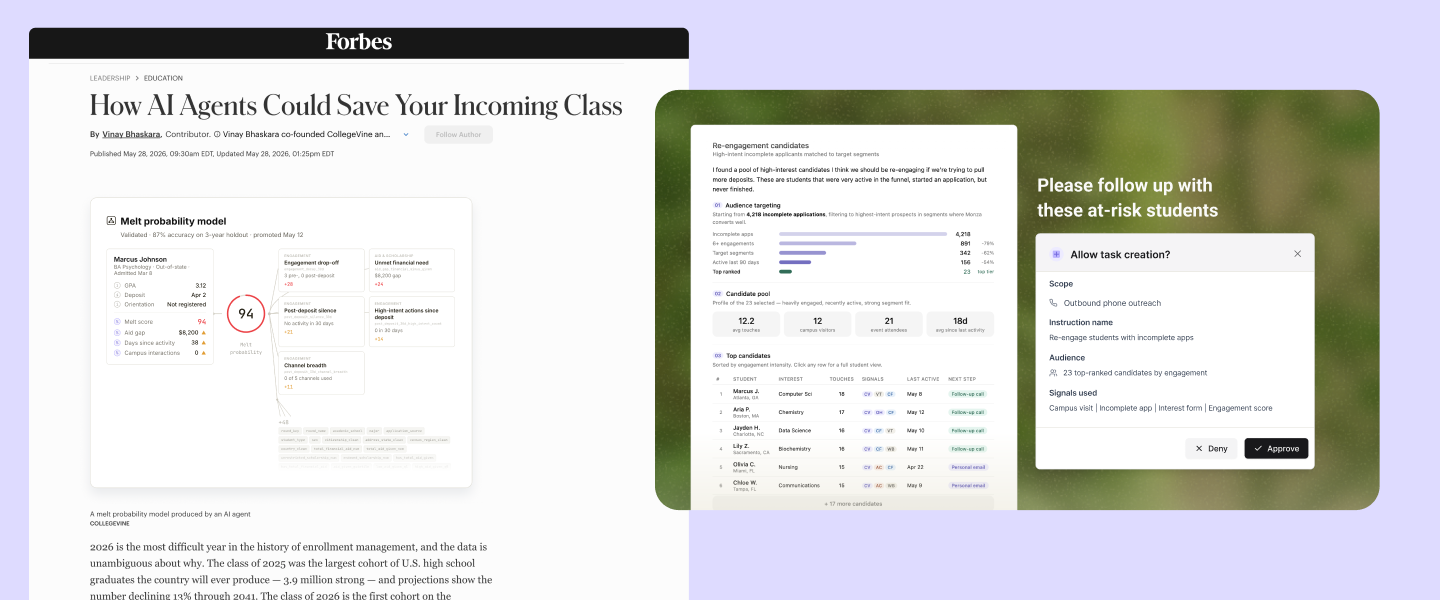

2026 is the most difficult year in the history of enrollment management, and the data is unambiguous about why. The class of 2025 was the largest cohort of U.S. high school graduates the country will ever produce — 3.9 million strong — and projections show the number declining 13% through 2041. The class of 2026 is the first cohort on the downslope. Every enrollment leader in America is now competing for a permanently smaller pool of students, and the intelligence they need to win is locked inside the CRM, waiting on weeks of analyst time to be turned into a decision.
2026 is also the first time that AI agents have been deployed with admissions teams. These agents can do in seconds what used to take an analyst weeks — and the institutions that put one in their enrollment team's hands this June will shape a class the rest will spend September trying to explain away.
The Demographic Cliff Has Arrived, and the Cost to Win Has Exploded
The demographic cliff was supposed to be the headline crisis. It turned out to be the easy part.
Underneath the demographic squeeze, family confidence in the value of a degree has collapsed. Only 35% of Americans now say it is "very important" for a person to have a college degree, down from 53% in 2019 and 75% in 2010, according to Gallup. A smaller cohort. A more skeptical cohort. A cohort whose parents are quietly weighing whether the local public option, a two-year alternative, or no degree at all is the smarter bet.
Meanwhile, the cost of winning each student is going in exactly the wrong direction. The average yield rate at four-year colleges has fallen to 30.2%, with publics hit hardest at just 25%, according to NACAC. Recruiting a single undergraduate now costs private four-year institutions an average of $2,795 — a 32% jump per RNL's most recent published benchmark — per RNL. And every student who slips out the door is walking off with five figures of expected net revenue. A class that misses by ten students is a multimillion-dollar miss.
The Answer Is in the Data — and Enrollment Teams Cannot Get to It












.png)
.png)


.png)