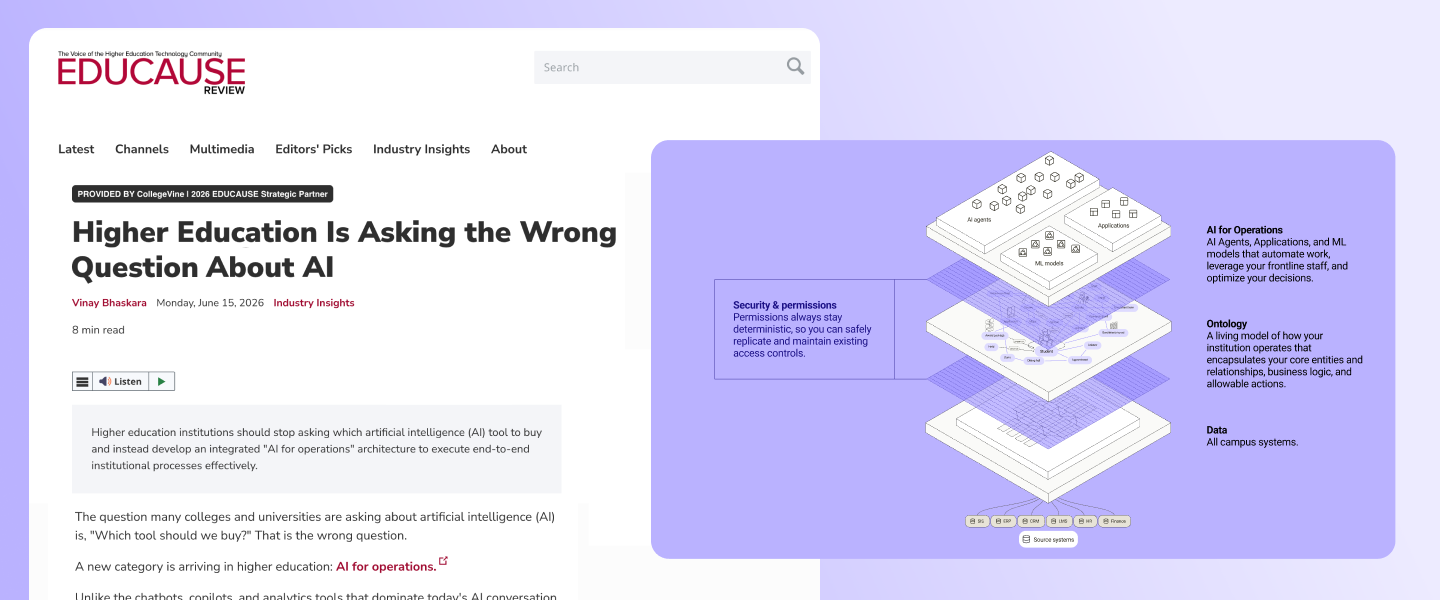
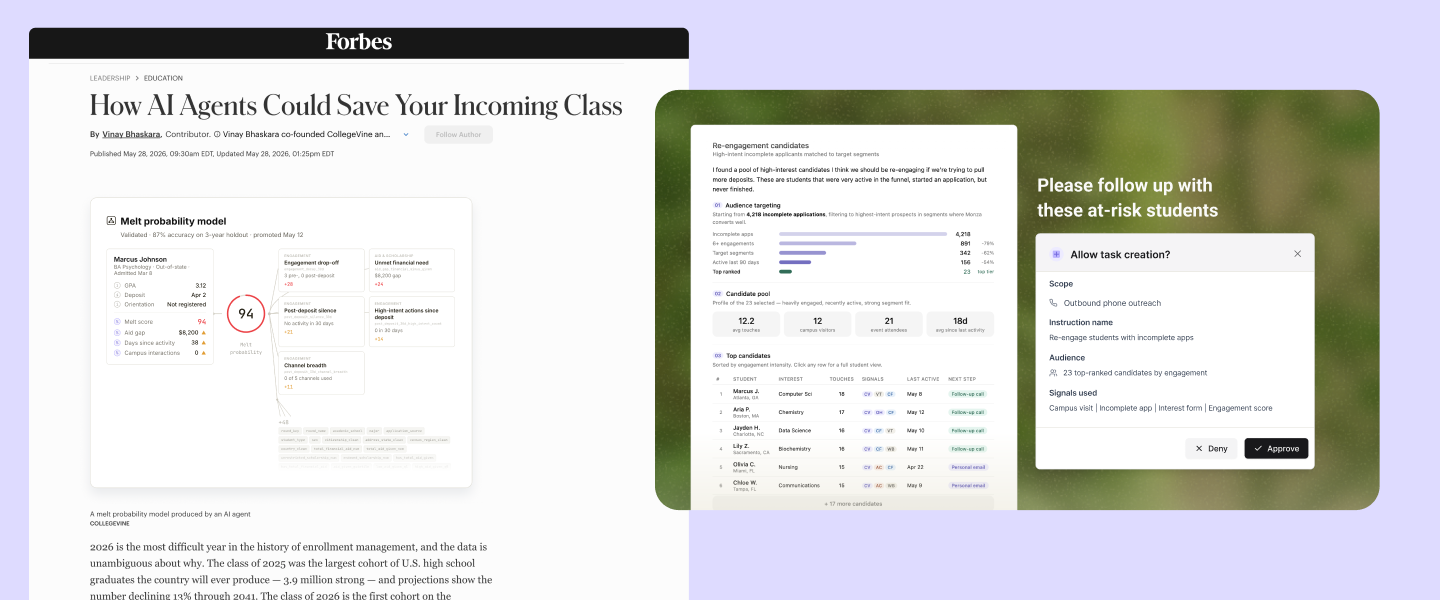
Higher education finance leaders know AI is coming. The question isn't whether to adopt it — it's how to do it responsibly, without disrupting the people and values that make institutions work.
That's the central finding of a new white paper from NACUBO. Based on in-depth conversations with CFOs and VPs of Finance across institution types, the paper maps where higher ed stands on AI today — and what separates institutions that are making real progress from those that are stuck.
The pressure to act is real
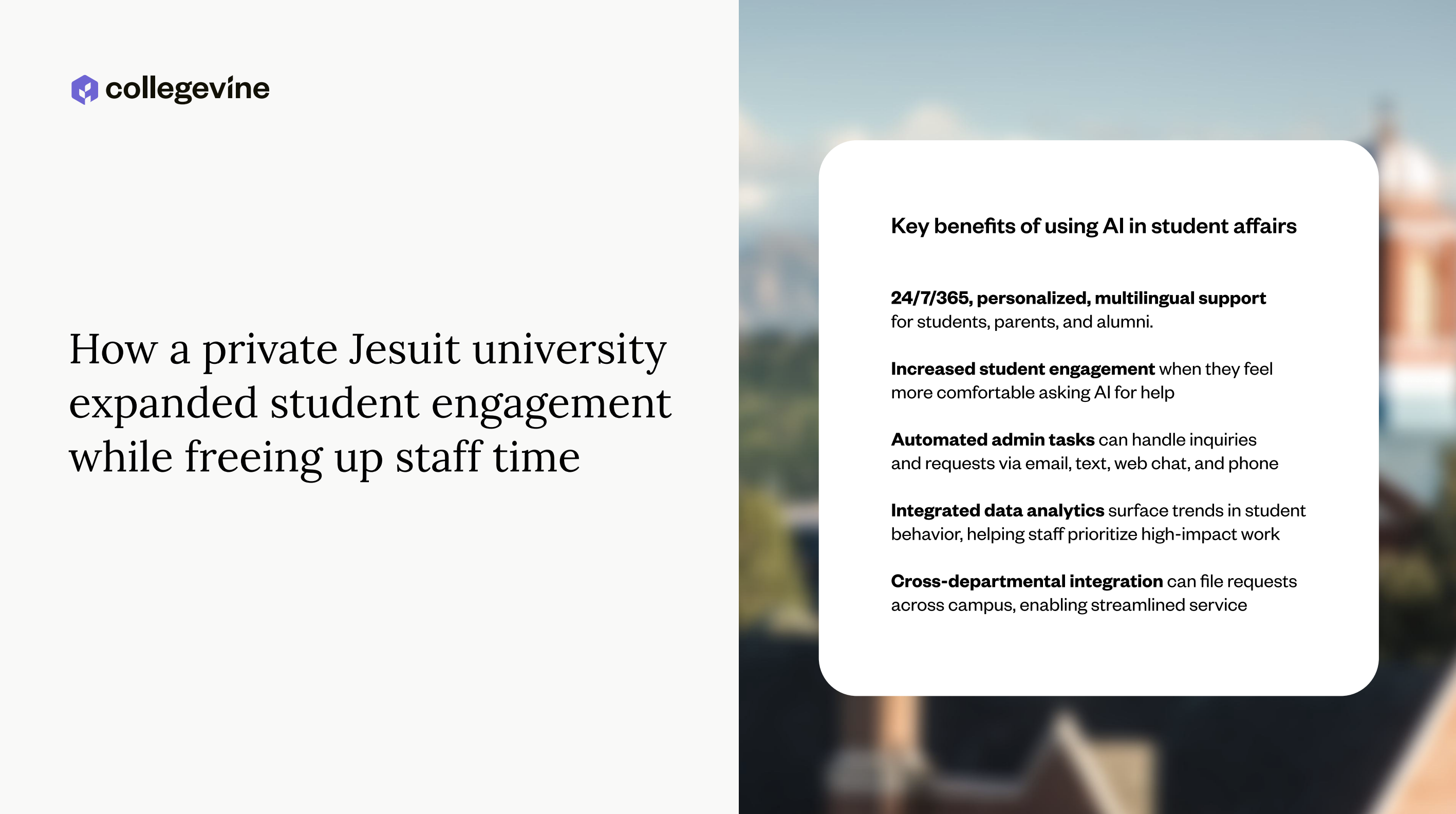
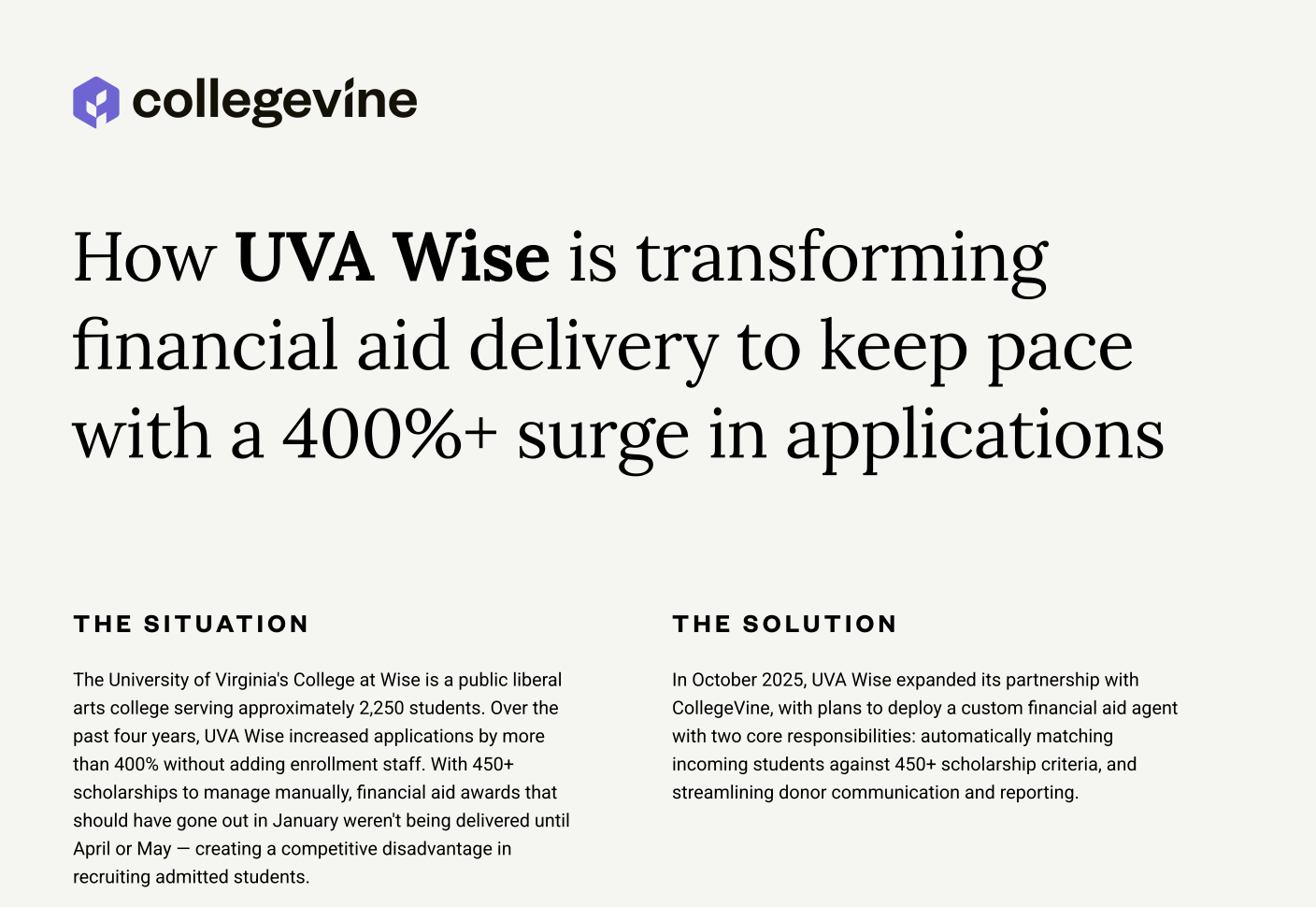
Higher education is facing a compounding set of financial challenges: enrollment uncertainty, federal funding volatility, rising administrative costs, and increasing competition for staff. Administrative spending now accounts for nearly a quarter of total institutional expenditures, and finance leaders are feeling it. As one finance leader at a mid-sized public university described it, cashiers at their institution spend up to 80% of their time at the start of each semester answering repetitive parent questions about payments — time that could be redirected to work that actually requires human expertise.
Yet despite widespread acknowledgment of these pressures, AI adoption in higher ed lags far behind other sectors. According to the 2025 Inside Higher Ed CBO Survey, 67% of institutions are still in the early exploration or limited pilot phase. Only 6% have made comprehensive strategic investments in AI across departments — compared to an adoption rate of 78% in other industries.
Slow and deliberate isn't the same as stuck
The white paper pushes back on the idea that higher ed's cautious pace is simply inertia. Institutions aren't resisting AI — they're making sure it's introduced equitably, with input from across campus, and in ways that reflect institutional values. That deliberateness is actually an advantage: research cited in the paper found that 95% of enterprise AI pilots fail not because of the technology, but because of poor implementation. Higher education's culture of careful consensus-building positions it to avoid exactly those pitfalls.
The finance leaders interviewed described a consistent playbook for getting started: begin with low-risk, high-impact pilots in areas like student inquiry automation, data reconciliation, and form processing; bring staff along as active participants rather than passive recipients of change; and look for AI partners who understand higher education's unique culture and can support the full change management process — not just deliver a product.
What the path forward looks like
The paper identifies three immediate areas where AI can deliver clear value today: automating routine student and parent inquiries, streamlining data reconciliation and reporting, and improving form processing and approvals. Institutions that have started in these areas report quick wins that build internal confidence and momentum for broader adoption.
The longer-term bet is on integrated platforms rather than fragmented point solutions — unified AI infrastructure that can be tailored across use cases, simplifying the staff experience and reducing the overhead of managing multiple vendors.
As one CFO put it simply: "Embrace AI, hire experts, study carefully, and implement cautiously."
Download the report
Get the full paper for a detailed look at the finance leader perspective on AI adoption, real-world use cases, and a practical framework for moving forward responsibly.














.png)
.png)


.png)