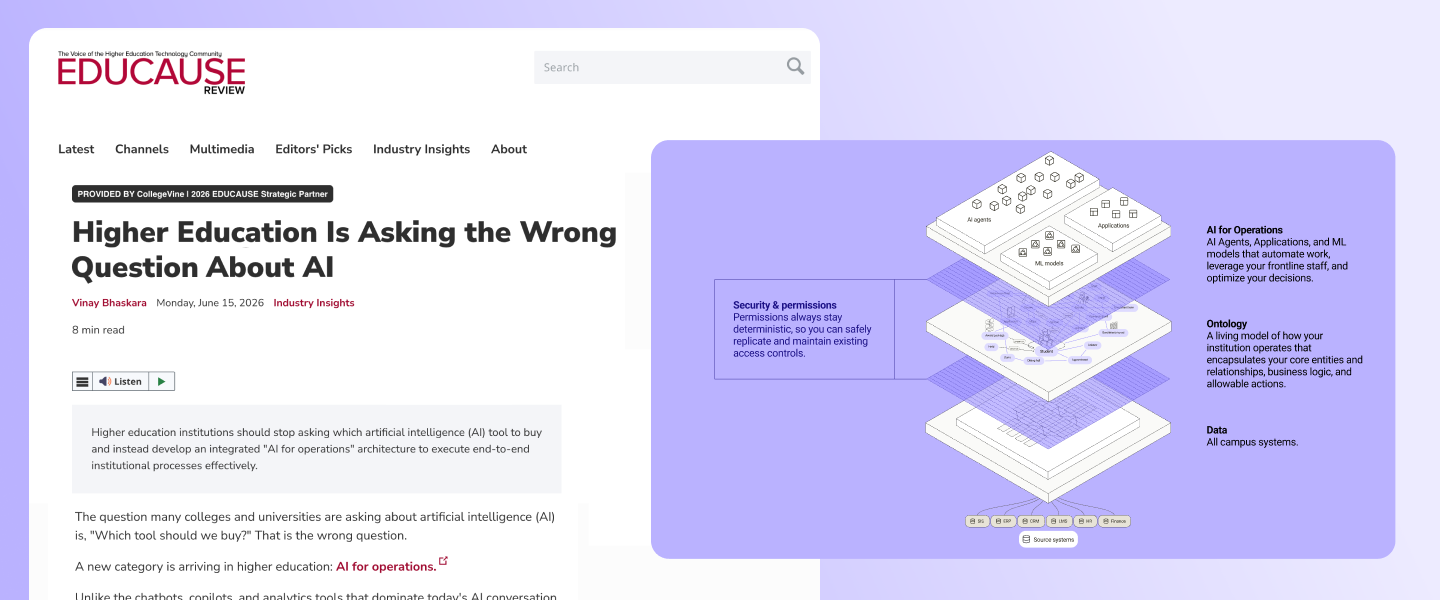
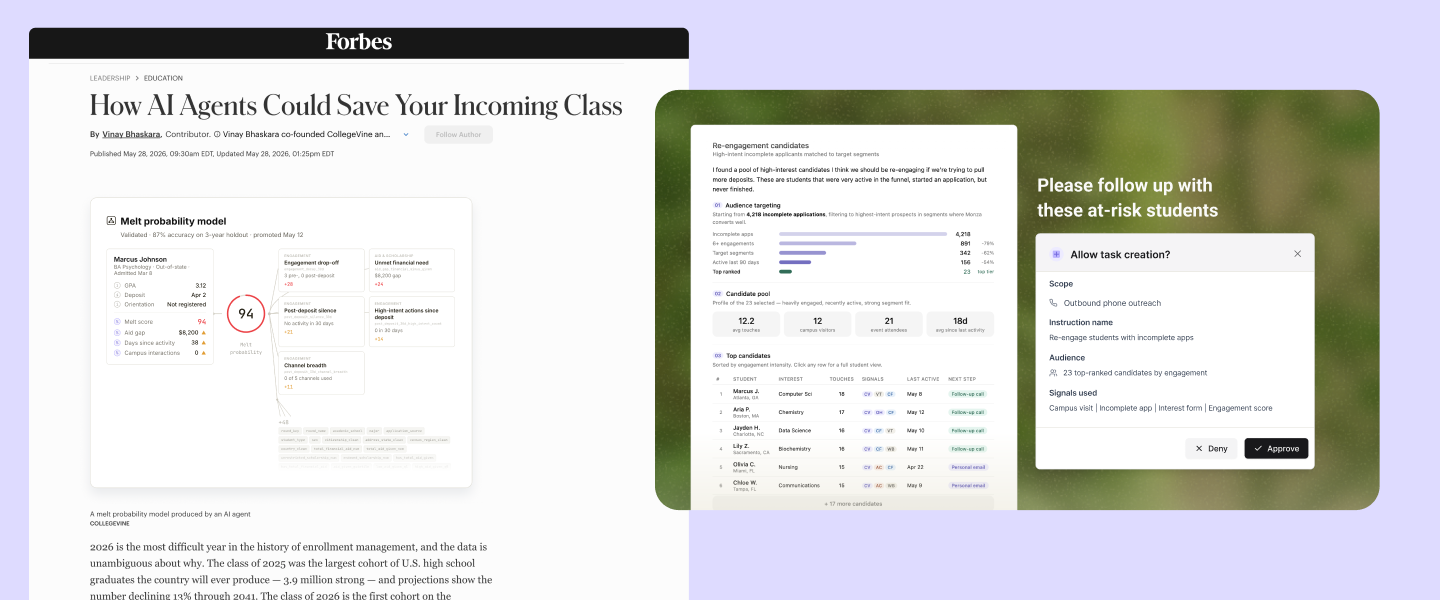
Everyone wants an AI agent right now. Almost no one pauses to check whether an agent is actually the right tool for the job before building one.
On the latest episode of Spark & Scale, Jessica Bohan, Lead Forward Deployed Engineer at CollegeVine, joined host Mickey Baines to walk through the diagnostic she runs before any agent gets built for a partner.
1. What outcome are you optimizing for — and does that even call for an agent?
Start with the business result, not the task. An agent tied to no real metric — applications processed faster, students retained, staff hours freed up — isn't solving anything.
That also means checking whether the work needs an agent at all. Deterministic processes just need a reliable workflow, not something that reasons. Routing a transcript request doesn't need a decision-maker. Agents earn their place when the input doesn't fit a fixed script and something has to weigh context and decide. Skip this check, and you get an expensive, hard-to-debug agent standing in for what should've been a five-step automation.
2. What does it need to actually be able to touch?
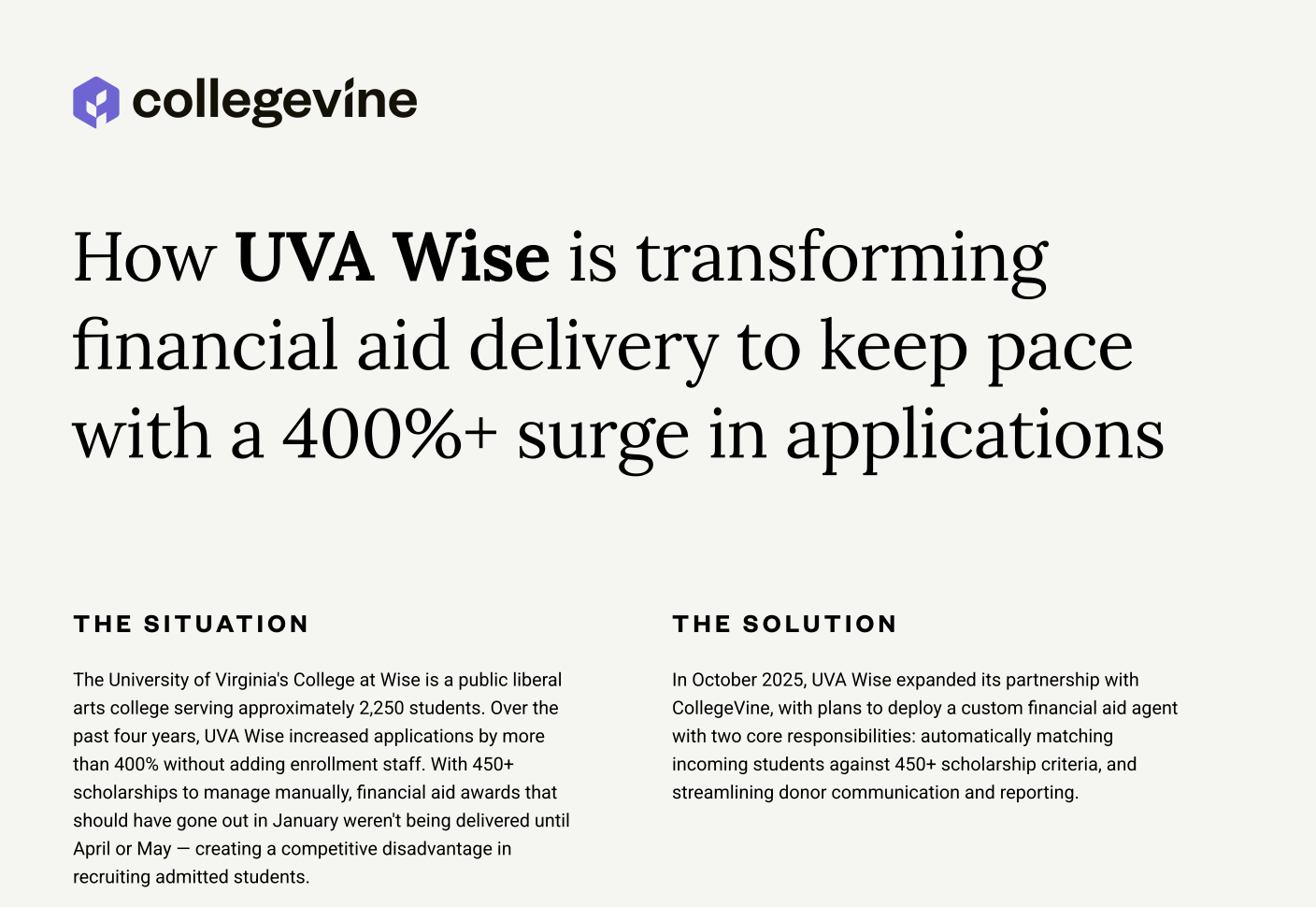
Once the outcome is set, the question turns concrete: what does the agent need access to in order to get there? A financial aid agent answering questions about a student's award needs to reach the system where that award lives — it can't reason its way to an answer it has no way to look up. The objective sets the destination; the tool list makes the trip possible. Get this wrong and the agent sounds confident while quietly guessing.
3. What's keeping it inside the lines?
The question teams most often bolt on late instead of designing in from the start: given everything the agent can touch, what governs it? Who can see which data, what it can act on versus just read, and whether it meets the same security and privacy bar as the rest of the institution's systems. With FERPA-protected student data in play, this isn't an afterthought — it's what makes the first two questions safe to act on.















.png)
.png)


.png)