AI in higher education has moved past the adoption question. The institutions ahead of the curve are asking what to deploy next, how to measure success, and how to scale AI safely across every department.
That's the shift CollegeVine CEO and co-founder Zack Perkins laid out at Vineyard, CollegeVine's gathering for higher education leaders. "This Vineyard is the first one where we're squarely in the camp of we are adopting, we're post adoption, and we're actually thinking about how we deploy these things," he said.
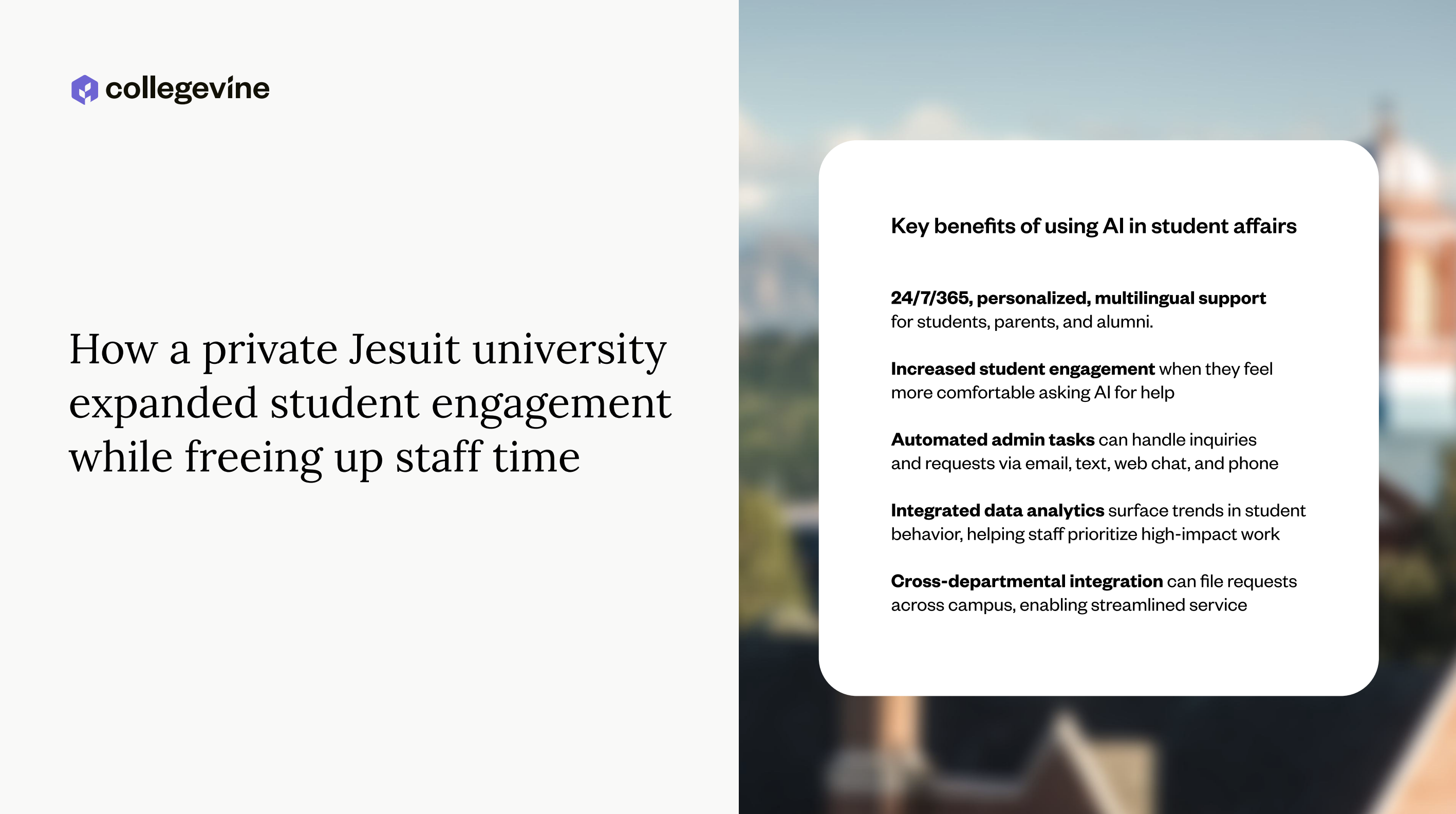
CollegeVine's partner institutions have deployed more than 3,000 agents across campus operations, spanning virtually every department, with a combined 236 million interactions with students, staff, and faculty.
Agents as team members, not software
Perkins framed agents as additional team members rather than software, which changes how they're managed. "You've got agents deployed doing jobs on your campus, but you're their boss. You're their supervisor," he said. Instead of reviewing activity logs, CollegeVine's admin view lets administrators talk to their agents directly and ask what they've been working on, "just like team members."
Agents that build their own software
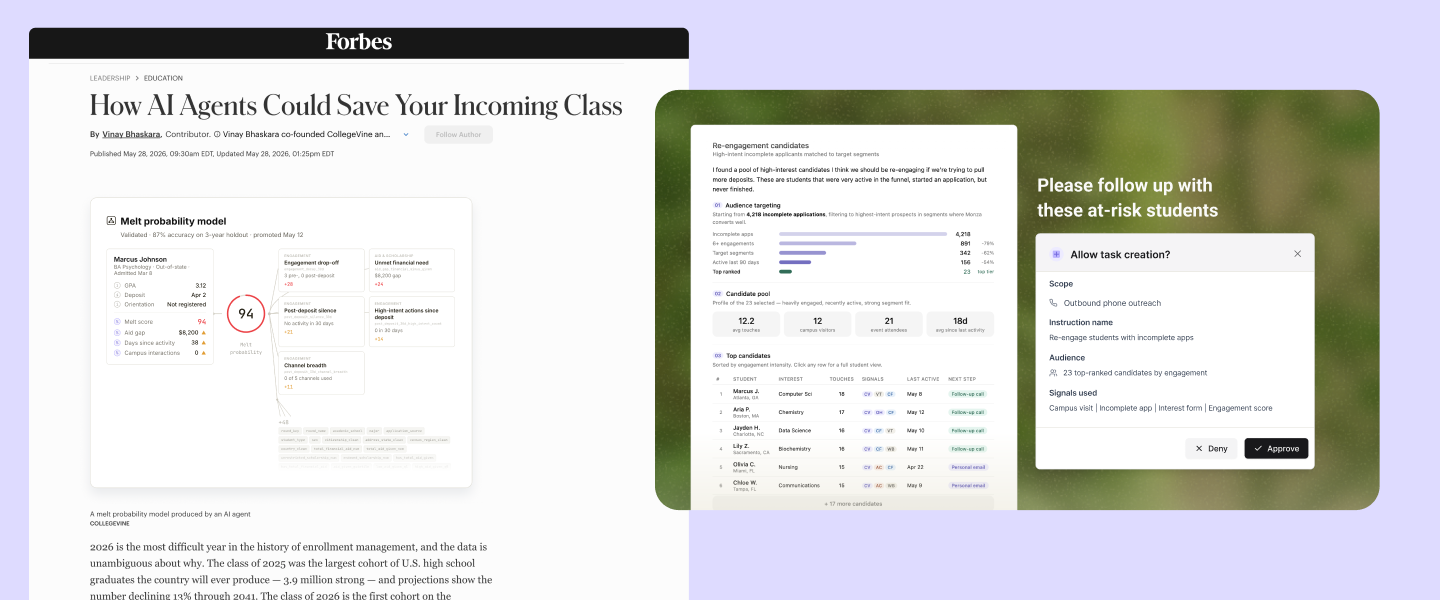
CollegeVine also gave its agents access to their own computer so they can write custom software for a department. One partner institution's agent, Carly, used the institution's historical data to build a custom melt prediction model: the top 10% highest-risk students it flagged accounted for half of all melt, and it surfaced 23 students who should have applied and hadn't. "I can publish a task right from here to Carly and have her reach out to those students," Perkins said.
One platform, one data layer
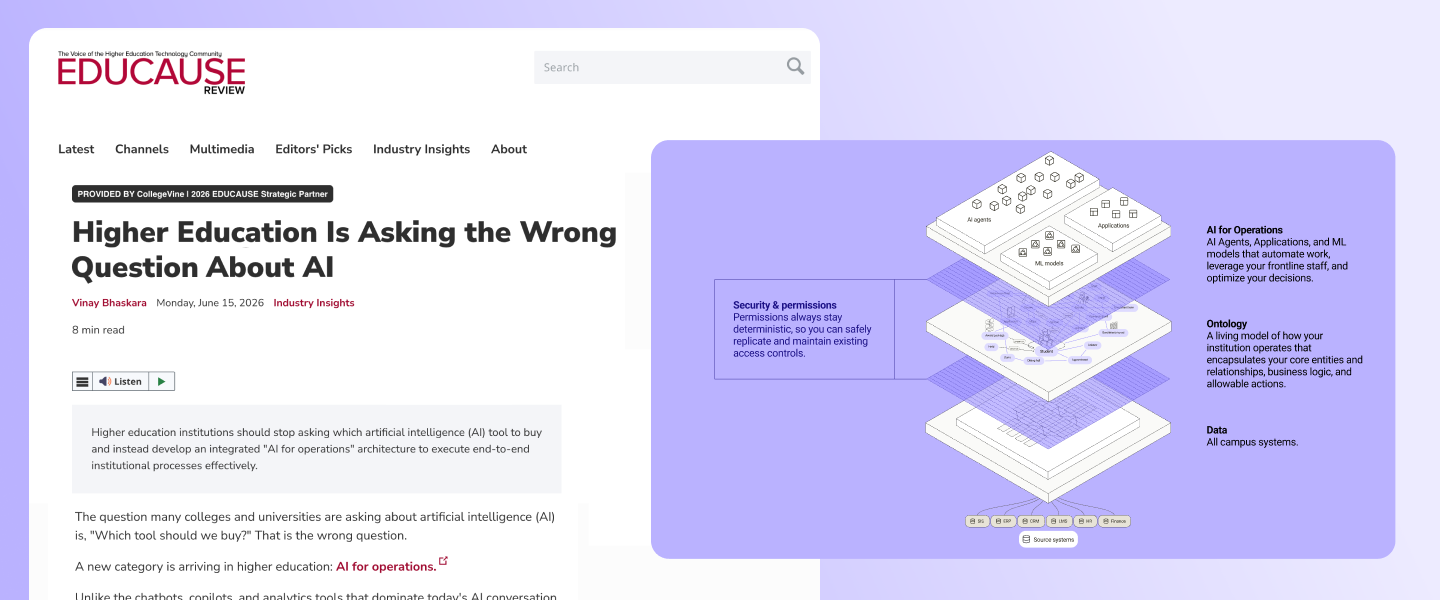
Perkins tied it together into a single vision: agents, applications, and predictive models all running on one platform that unifies data across every campus system. "The more you can get ahead of that, the more you can really transform your operations," he said.









.png)
.png)


.png)